78% of Enterprises Use AI—But 80% Can't Measure Its Impact

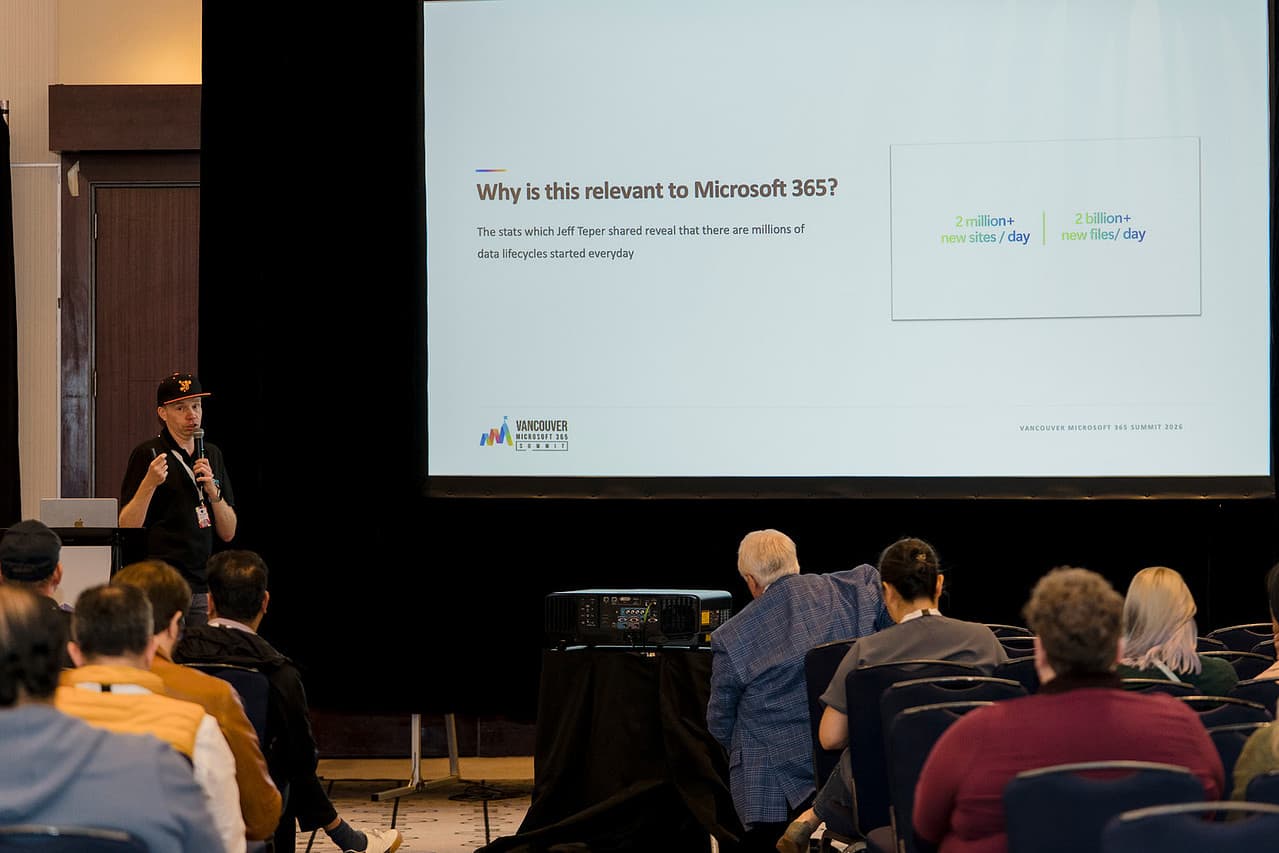
At Toronto Tech Week 2026, leaders from across the technology ecosystem gathered to discuss one of the biggest challenges facing organizations today: turning AI experimentation into measurable business value.
Hosted alongside Appficiency and AskCipher, our session explored a reality many organizations are experiencing firsthand. While AI adoption is accelerating rapidly, most enterprises are still struggling to move beyond pilots and proof-of-concepts.
In fact, one statistic discussed during the session stood out:
Nearly 78% of enterprises are using AI, but more than 80% are unsure whether they're seeing meaningful value from it.
The conversation quickly moved beyond AI tools and prompts and focused on a more important question:
What needs to be in place before AI can actually deliver results?
One of the key themes throughout the discussion was that AI doesn't solve broken processes. It exposes them.
Organizations often assume that introducing AI will automatically create efficiency. However, if data is disconnected, processes are inconsistent, and governance is lacking, AI simply amplifies those challenges.
The panel explored a common example: hiring.
While AI can assist with job descriptions, resume screening, interview scheduling, and candidate evaluation, every stage introduces new questions around trust, context, approvals, and decision-making. AI may accelerate parts of the process, but organizations still need governance, oversight, and human judgment.
The same challenge exists across finance, operations, HR, procurement, and customer service. AI is only as effective as the processes and data supporting it.
One of the strongest messages from the session was that governance is no longer just an IT concern. It's becoming an AI concern.
Organizations are increasingly asking:
- Who can access data?
- What information should AI be allowed to see?
- How do we maintain security and compliance?
- How do we ensure AI-generated outputs can be trusted?
Without governance, organizations risk creating new problems while trying to solve old ones.
This is where many enterprises are discovering that AI readiness starts long before deploying an AI tool.
It starts with understanding data, permissions, workflows, and accountability.
One of the biggest cost savings in governance is the one nobody notices: the breach that never occurs.
When organizations think about governance, they often focus on compliance requirements and regulatory fines. But the real cost of poor governance can be much higher. A security incident can lead to lost customer trust, reputational damage, legal costs, operational disruption, and lost revenue from customers who no longer feel confident sharing their data.
Strong governance isn't just about meeting compliance standards. It's about protecting the business from risks that can take years to recover from. Every permission model, security control, and data governance policy helps reduce the likelihood of costly incidents before they happen.
This ties perfectly into the article's message because it reinforces that governance is not an IT expense—it's a business investment and a competitive advantage.
Another major theme discussed at Toronto Tech Week was the importance of connected enterprise systems.
Organizations have spent years investing in platforms such as:
- NetSuite
- Microsoft 365
- SharePoint
- CRM platforms
- ERP systems
- HR systems
The goal isn't to replace these investments. The goal is to make them work together more effectively. This aligns closely with what we're seeing across the SnapOn Software and Appficiency customer base.
Before organizations can leverage AI effectively, they need access to accurate, connected, and governed information. Disconnected systems create duplicate data, inconsistent reporting, and operational inefficiencies. AI doesn't eliminate those issues—it often magnifies them.
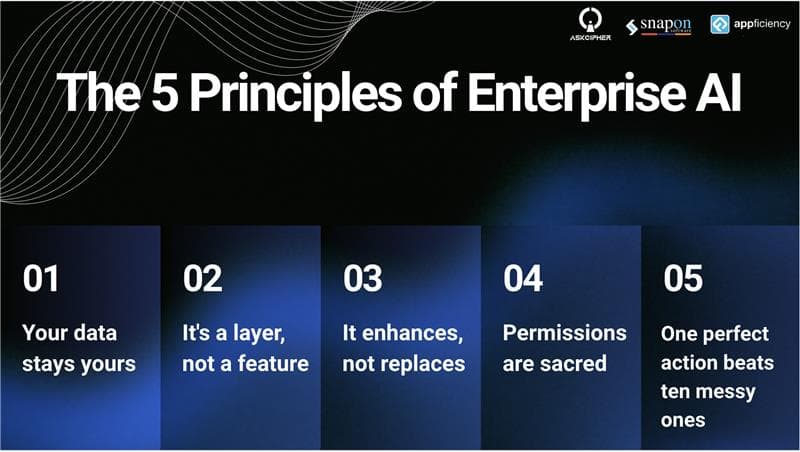
Throughout the discussion, several principles emerged as essential for successful AI adoption:
Organizations need confidence that enterprise information remains secure, governed, and accessible only to the right people.
The panel emphasized that enterprises are not looking to rip and replace their technology stack. Instead, they want AI to enhance the systems they already rely on every day.
Enterprise AI must respect existing security models and permissions structures. Just because AI can access information doesn't mean it should.
An 80% accurate answer may be acceptable for brainstorming. It's not acceptable for financial reporting, compliance processes, procurement approvals, or customer records.
The organizations seeing the greatest success with AI aren't necessarily the ones deploying the most tools. They're the ones creating strong foundations first.
That means:
- Improving data governance
- Connecting business systems
- Eliminating duplicate information
- Automating repeatable workflows
- Creating visibility across departments
- Ensuring information remains secure and trusted
These fundamentals create the conditions that allow AI to deliver meaningful business outcomes.
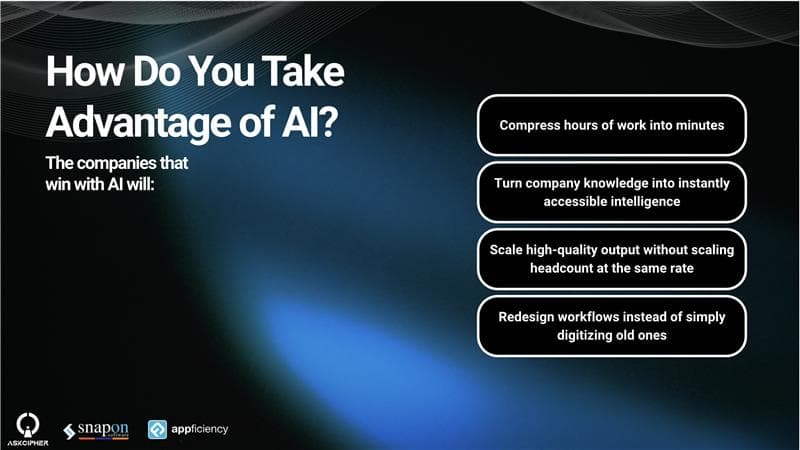
One of the themes we see repeatedly across our customers is that AI success depends on what happens behind the scenes.
Organizations need secure access to information, structured processes, governed data, and connected systems before AI can provide reliable insights or automation.
Whether that's streamlining data collection through intelligent forms, improving governance within Microsoft 365 and SharePoint, automating business processes, or connecting critical enterprise systems, the goal remains the same:
Create trusted, connected information that enables smarter decision-making.
Because before organizations can become AI-ready, they need to become data-ready.
The future won't belong to the organizations that adopt AI the fastest. It will belong to the organizations that combine AI with strong governance, connected systems, trusted data, and well-designed processes.
The conversation at Toronto Tech Week reinforced something we're seeing every day: AI is powerful.
But the organizations creating the most value are the ones building the right foundation underneath it.
Want to sit in on the discussion? Here are the recordings from the session for your convenience:
About the Author
Alexandra Fajgenbaum
Head of Operations