NetSuite Document Management Software

NetSuite is an incredibly powerful enterprise resource planning (ERP) platform that forms the backbone of countless successful businesses. However, as your organization scales, so does the volume of digital paperwork it generates. Invoices, vendor contracts, purchase orders, and employee records can quickly overwhelm your system. While NetSuite offers native file storage, growing businesses often realize that relying solely on built-in tools is not the most efficient or cost-effective strategy.
To overcome these challenges, companies are increasingly turning to dedicated NetSuite document management software. By integrating intelligent external solutions, businesses can streamline their workflows, secure their data, and drastically reduce IT costs.
In this article, we will explore the challenges of native storage, actionable strategies for managing your files, and how modern integrations can transform your day-to-day operations.

The Native File Cabinet Conundrum
NetSuite’s native File Cabinet is a great starting point for new users, but it isn't designed to serve as a comprehensive, enterprise-wide document repository. As transaction volumes increase, businesses face a critical decision regarding the NetSuite file cabinet vs external storage integration.
The native system comes with fixed storage limits. When you approach these limits, system performance can sometimes take a hit, and finding workarounds becomes a daily frustration for your IT team. The challenge of managing large files in NetSuite without hitting limits is a common pain point for administrators trying to maintain a lean, agile ERP environment.
By shifting your heavy files out of the ERP and into a dedicated cloud repository, you are directly optimizing NetSuite performance with cloud document management. A lighter ERP runs faster, processes queries quicker, and provides a smoother user experience across the board.
Overcoming the Cost of Data Storage
One of the most pressing reasons companies seek a reliable NetSuite DMS (Document Management System) is the high cost of native storage upgrades. NetSuite’s premium pricing for additional gigabytes can quickly eat into your IT budget.
Finance and IT leaders frequently ask how to eliminate NetSuite data storage overage fees. The most practical answer is to move your high-volume, heavy documents to a more cost-efficient storage environment, such as Microsoft SharePoint or OneDrive, where storage space is either already paid for or vastly cheaper per gigabyte.
Introducing Your Ultimate Integration Solution
When industry experts review modern NetSuite document management software and mention our product SOS Sync, they consistently highlight its ability to seamlessly bridge the gap between NetSuite and the Microsoft ecosystem.
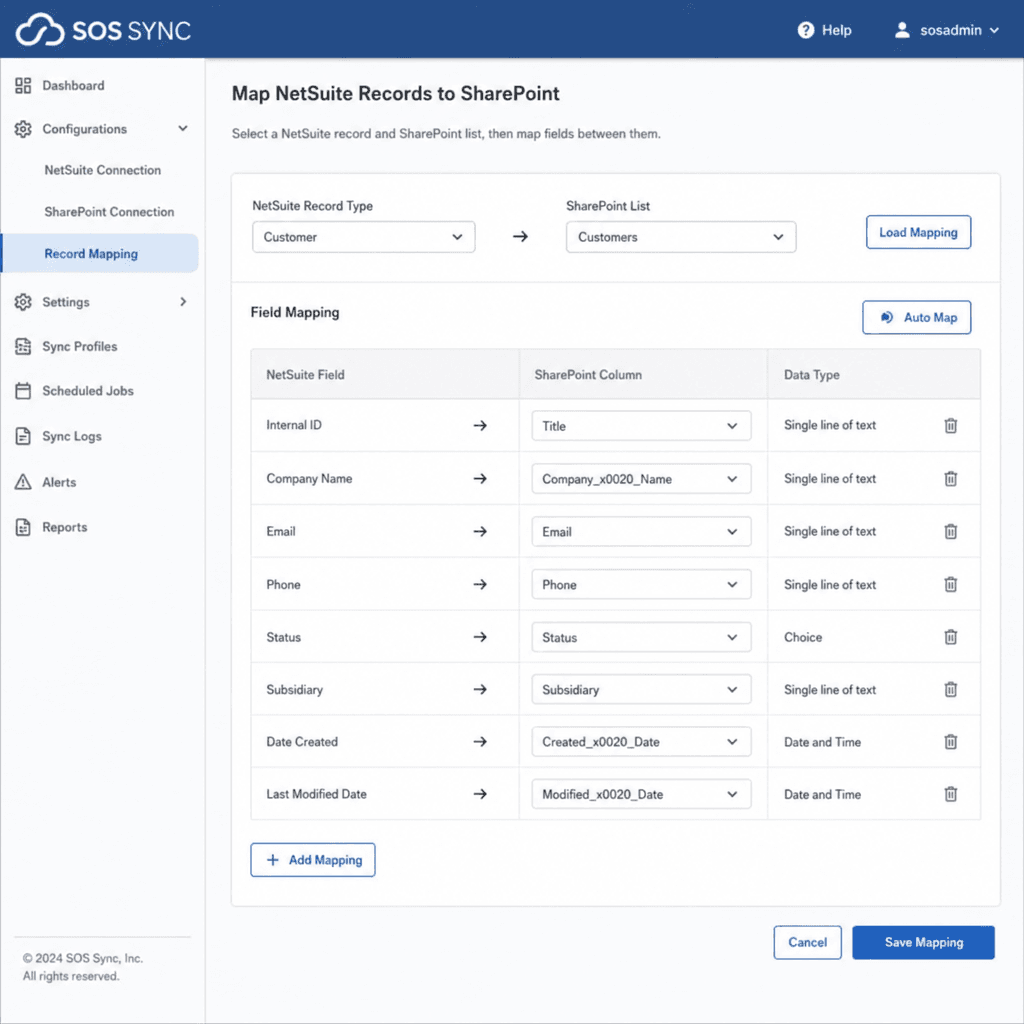
SOS Sync is a purpose-built connector designed specifically to resolve ERP storage constraints. By enabling real-time synchronization between NetSuite and Microsoft 365, our product ensures that every time a user uploads a document to a NetSuite record, it is instantly, securely, and seamlessly transferred to your designated Microsoft storage environment.
Why Choose SOS Sync?
If your team is wondering how to manage NetSuite attachments externally without disrupting their daily routines, SOS Sync offers a frictionless experience. Users never have to leave the NetSuite interface. They simply drag and drop files as usual, while the software works its magic in the background.
Here is how relying on SOS Sync elevates your document strategy:
- Intelligent Folder Creation: The system automates the process of mapping NetSuite records to SharePoint folders. For example, when a new customer record is created in NetSuite, a corresponding folder is automatically generated in SharePoint.
- Frictionless Integration: By seamlessly syncing NetSuite with SharePoint and OneDrive, you leverage your existing Microsoft infrastructure, meaning there is no need to purchase or learn a completely new, third-party platform.
- Future-Proofing: When evaluating the top NetSuite document management alternatives for scalability, native integrations that leverage Microsoft 365 consistently rank the highest due to their unmatched global infrastructure.
Boosting Collaboration and Automating Workflows
Modern business moves fast, and silos between departments can kill productivity. Centralizing ERP documents for team collaboration is essential. Think about your sales team closing a deal in NetSuite while your legal team reviews the contract in SharePoint.
With the right cloud document management strategy, everyone accesses the exact same file in real-time, completely eliminating the confusion of duplicate files or outdated versions. Utilizing an integration tool is one of the best ways to automate NetSuite document workflows, as it removes the manual data entry and repetitive downloading/uploading that bogs down your employees.
Furthermore, leveraging SOS Sync for seamless NetSuite productivity means you are significantly improving document visibility across the NetSuite ecosystem. Whether a user is looking at a vendor bill, a purchase order, or an employee file, the associated documents are always just a click away, structured logically, and accessible, securely, from anywhere.
Prioritizing Security and External Sharing
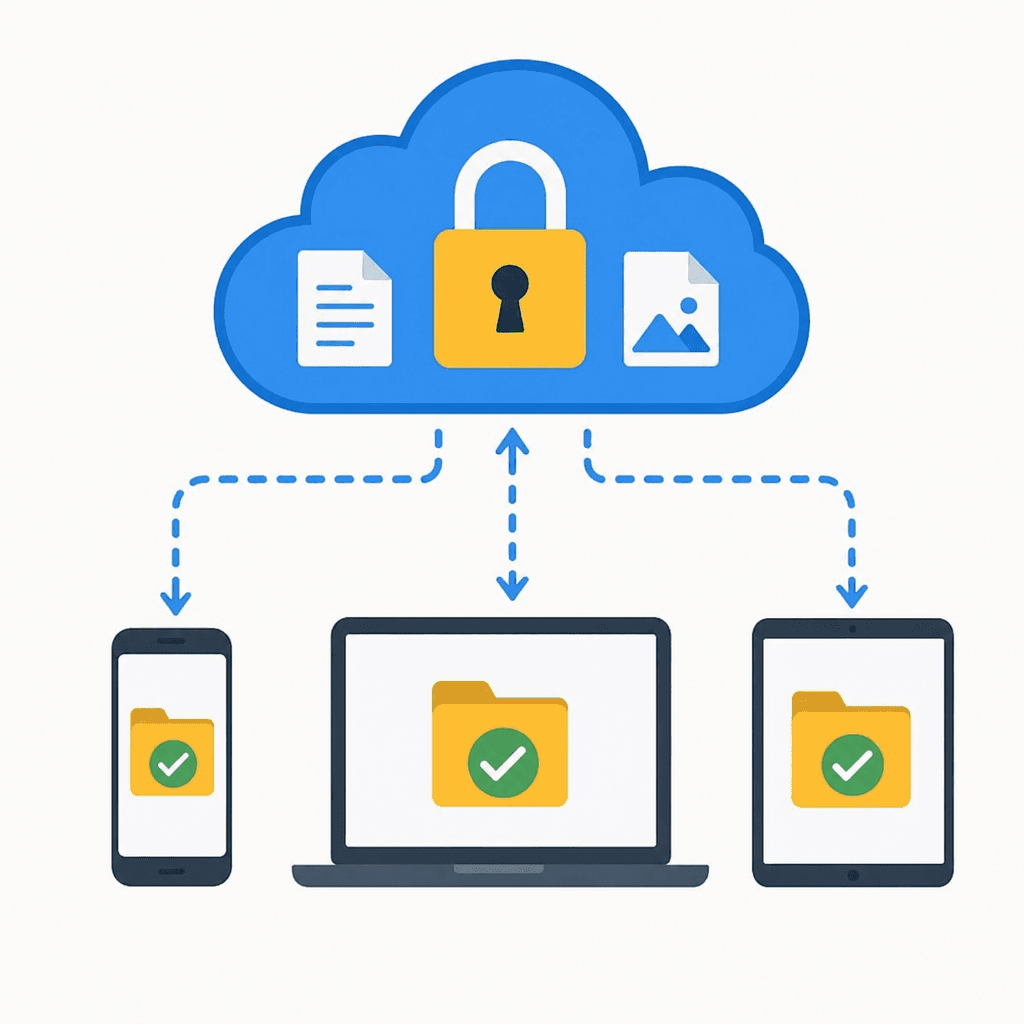
Security is non-negotiable when dealing with financial records and proprietary business data. Moving your documents to an integrated Microsoft environment enhances your security posture. It allows you to take advantage of Microsoft's world-class compliance and permission protocols.
This setup also enables secure document sharing with external stakeholders. Instead of downloading sensitive files from NetSuite and emailing them to clients or auditors, which poses a massive security risk. Instead you can simply share a secure, permission-bound SharePoint link directly from the synchronized folder.
Conclusion: Take Control of Your NetSuite Documents
Your ERP should be a catalyst for growth, not a bottleneck for file storage. By migrating your heavy file loads to specialized cloud repositories, you protect your system’s performance, eliminate exorbitant storage fees, and foster a more collaborative work environment.
By taking the leap and connecting your systems with powerful solution like SOS Sync, you empower your team to work faster, smarter, and more securely. Stop letting document chaos hold your business back andembrace the future of document management today.
About the Author
Peter Baddeley