Now Available in ProvisionPoint: AI Integration and Smarter Lifecycle Management
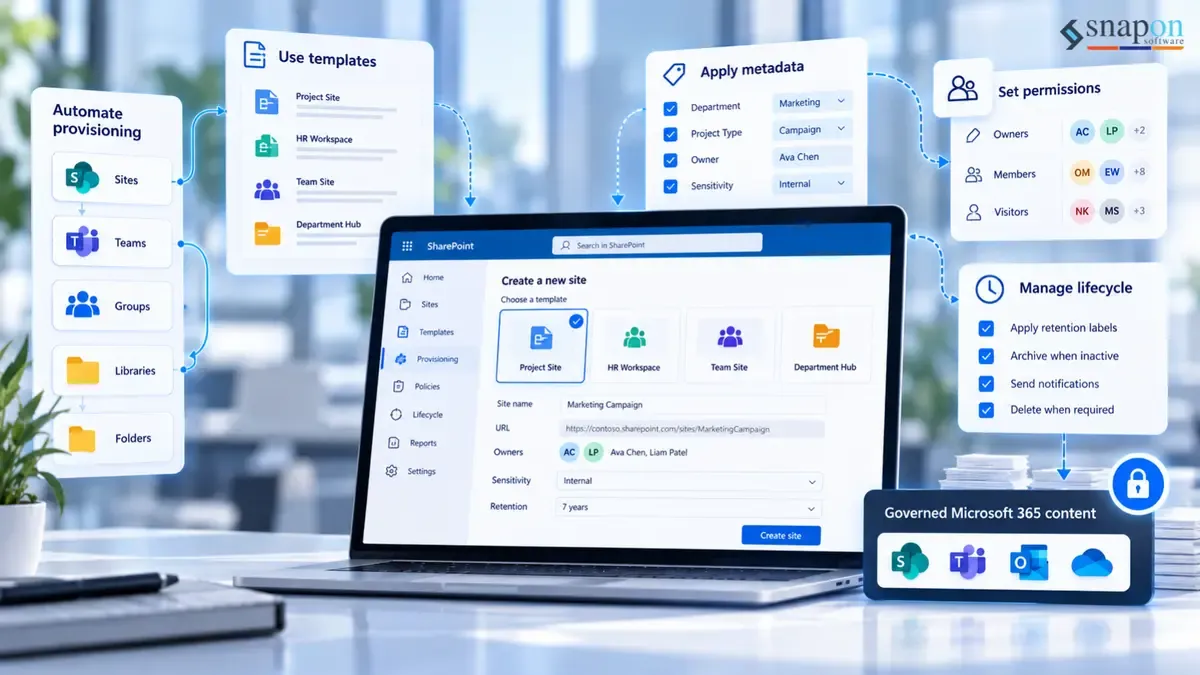
Microsoft 365 environments are constantly changing. New Teams, SharePoint sites, and Microsoft 365 Groups are created, existing workspaces need ongoing governance, and inactive spaces eventually need to be reviewed.
To make these processes easier, ProvisionPoint by SnapOn Software has released two new capabilities: AI Integration through MCP and Lifecycle Notifications in Microsoft Teams.
Together, these features make it easier to bring existing Microsoft 365 workspaces under governance and simplify how workspace owners manage lifecycle decisions.
Connect Microsoft Copilot to ProvisionPoint with MCP
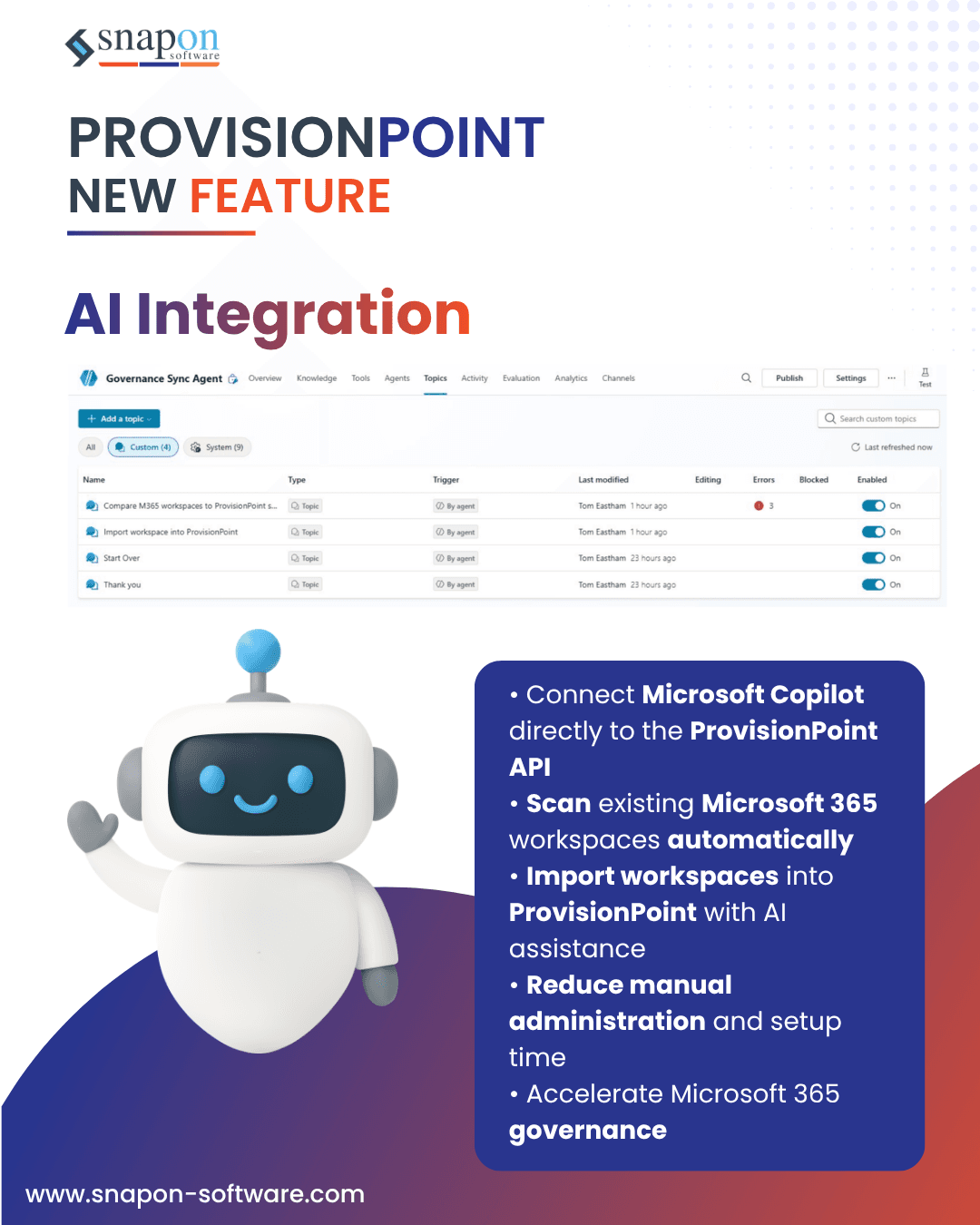
ProvisionPoint now supports AI Integration through a Model Context Protocol (MCP) server, enabling Microsoft Copilot agents to connect with the ProvisionPoint API.
The first use case focuses on a common challenge: bringing existing Microsoft 365 workspaces under management.
Using a Copilot agent, organizations can discover existing workspaces across their Microsoft 365 environment and import them into ProvisionPoint. This makes it faster and easier to onboard an established environment rather than identifying and importing workspaces manually.
For organizations that have accumulated Teams, SharePoint sites, and Microsoft 365 Groups over time, this provides a simpler and quicker way to begin bringing those existing workspaces into a consistent governance framework.
Bringing AI Into Microsoft 365 Governance
As organizations expand their use of Copilot and AI agents, AI is beginning to play a larger role beyond content creation and information retrieval.
ProvisionPoint's MCP integration extends that role into Microsoft 365 governance.
By connecting Copilot agents with the ProvisionPoint API, users can interact with governance processes through a familiar conversational experience while ProvisionPoint provides the underlying management and governance capabilities.
The initial workspace import capability is the first example of how this connection can help reduce manual administrative work and make Microsoft 365 governance easier to manage.
Manage Lifecycle Reviews Directly in Microsoft Teams
ProvisionPoint has also introduced Lifecycle Notifications, making it easier for workspace owners to participate in ongoing governance.
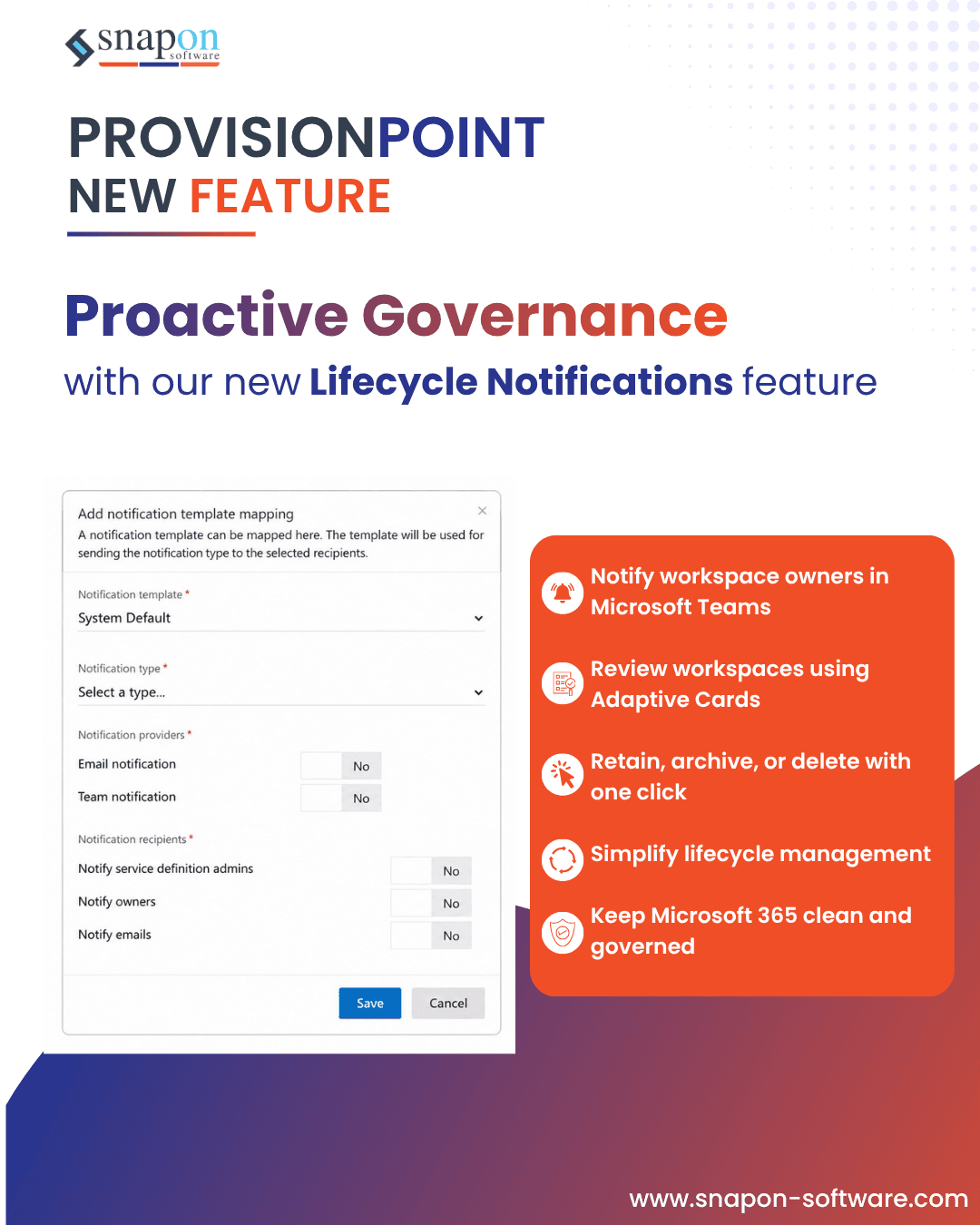
Instead of requiring users to navigate to another system when a workspace needs to be reviewed, lifecycle notifications can now be delivered directly within Microsoft Teams.
Using Adaptive Cards, workspace owners can review inactive workspaces and choose to retain, archive, or delete them without leaving Teams.
This brings lifecycle management into a tool employees already use throughout their day and makes it easier to take action when a workspace reaches its review point.
Make Lifecycle Governance Easier to Act On
Setting lifecycle policies is only one part of effective Microsoft 365 governance. Organizations also need workspace owners to respond when action is required.
Bringing lifecycle reviews into Teams reduces the number of steps involved in that process. Workspace owners can make decisions where they already work, while IT teams can maintain greater consistency across the Microsoft 365 environment.
Over time, this can help organizations reduce inactive or unnecessary workspaces, keep information better organized, and make lifecycle governance easier to maintain.
A More Connected Approach to Microsoft 365 Governance
These new features extend ProvisionPoint's governance capabilities in two important areas.
AI Integration through MCP connects Microsoft Copilot agents with ProvisionPoint, starting with the ability to discover and import existing Microsoft 365 workspaces.
Lifecycle Notifications bring workspace reviews directly into Teams, allowing owners to quickly decide whether inactive workspaces should be retained, archived, or deleted.
Together, they make Microsoft 365 governance more connected to the tools and experiences users are already working with — while helping IT teams reduce manual processes and maintain greater control over the workspace lifecycle.
About the Author
Peter Baddeley