What We Learned at CollabDays Poland 2026: Copilot, Governance, and the Future of Collaboration
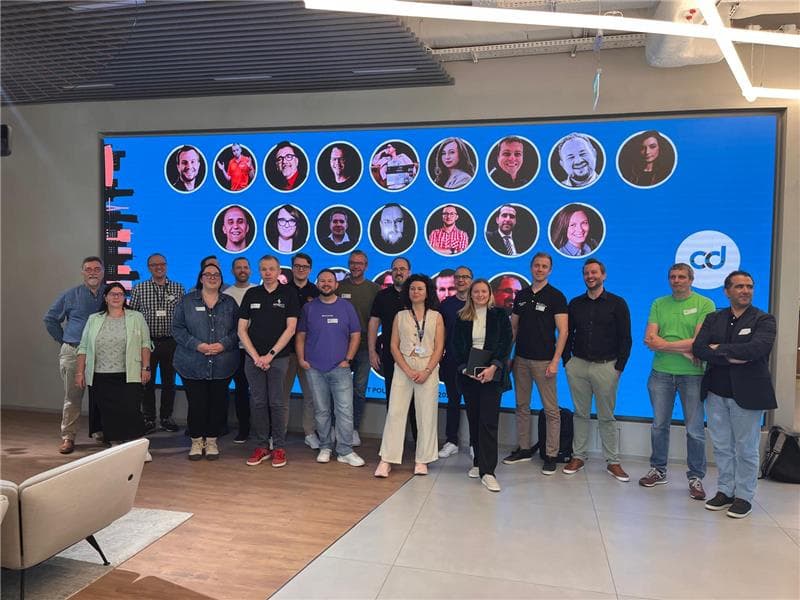
The Microsoft community gathered in Warsaw on June 11th and 12th for the ninth edition of CollabDays Poland, one of the country's premier Microsoft-focused events. Bringing together more than 150 attendees, the event provided a forum for IT professionals, developers, architects, and business leaders to exchange ideas, share experiences, and explore the latest innovations across the Microsoft ecosystem.
This year's event was impossible to discuss without talking about one topic: Microsoft Copilot.
Across sessions, discussions consistently focused on how organizations can use AI effectively, particularly within development environments and day-to-day business operations. While excitement around Copilot continues to grow, the conversation has evolved beyond experimentation and into practical implementation.
The key questions attendees were asking included:
- How can Copilot be used effectively across the organization?
- How can organizations drive successful user adoption?
- What governance controls need to be in place?
- How can businesses ensure Copilot is accessing the right information?
- What foundations are required before AI can deliver meaningful business value?
The consensus throughout the event was clear: successful AI adoption is not simply a technology initiative. It requires strong governance, structured collaboration, and trusted information.
One of the strongest themes throughout CollabDays Poland was the relationship between AI and governance.
Organizations are increasingly realizing that Copilot's effectiveness depends entirely on the quality of the content, permissions, and collaboration environments it can access. If information is fragmented, overexposed, poorly organized, or difficult to find, AI will simply amplify those existing challenges.
Many sessions focused on practical strategies for:
- Improving Microsoft 365 governance
- Establishing clear ownership of information
- Managing permissions and access controls
- Creating consistent collaboration experiences
- Supporting long-term Copilot adoption
As AI capabilities continue to evolve, governance is no longer an optional consideration. It is becoming a critical requirement for organizations looking to maximize the value of their Microsoft 365 investments.
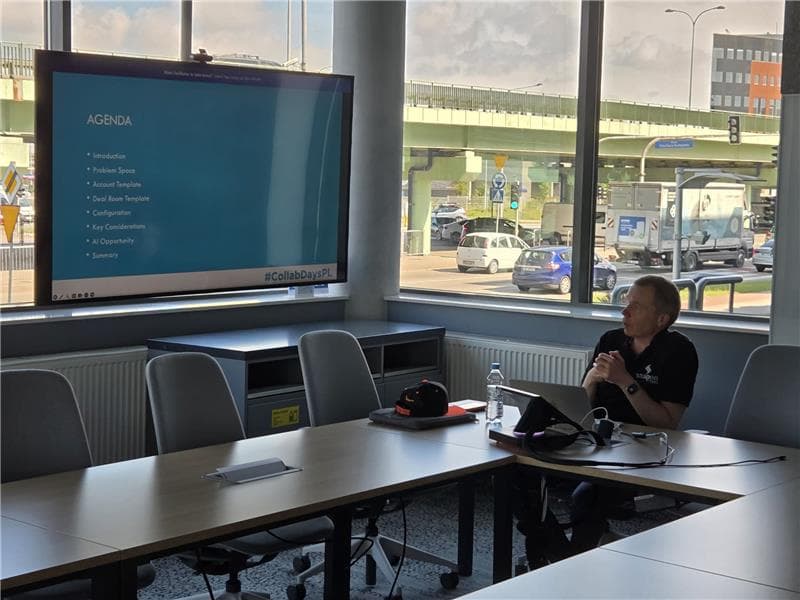
Among the sessions focused on practical Copilot adoption was "Understanding Collaboration Spaces in Teams with Sales for Microsoft 365 Copilot," delivered by Peter Baddeley, Director of GTM Sales and Client Solutions at SnapOn Software. As a speaker, trusted advisor, and Microsoft 365 strategy and governance specialist, Peter shared how organizations can use Microsoft Teams and Copilot to improve collaboration across sales, operations, and the broader business.
The session explored a challenge many organizations continue to face.
Sales teams often work primarily within CRM systems, while the broader organization collaborates in Microsoft Teams. At the same time, many sales professionals spend much of their day in Outlook. This creates disconnected experiences, fragmented information, and challenges when teams need to collaborate around customers, accounts, and opportunities.
Peter demonstrated how Microsoft Teams Collaboration Spaces can help bridge these gaps by creating dedicated workspaces around customer accounts and sales opportunities. These spaces bring together conversations, files, notes, and CRM-connected information into a single collaborative environment, enabling sales teams and supporting departments to work together more effectively.
The session reinforced an important message that aligned with many discussions throughout the event: AI performs best when collaboration is connected, information is accessible, and governance is properly established.
While Copilot dominated conversations throughout the event, the most valuable insights were not necessarily about AI itself.
Instead, the focus was on the foundations required for AI success.
Organizations that want to realize the full potential of Copilot must first ensure they have:
- Connected collaboration environments
- Clear governance frameworks
- Well-managed permissions
- Trusted business information
- Consistent ways of working across teams
The organizations seeing the greatest success with AI are not simply deploying new technology. They are creating environments where people, processes, information, and AI can work together seamlessly.
CollabDays Poland 2026 highlighted how quickly the Microsoft ecosystem is evolving and how rapidly organizations are moving from AI experimentation to AI implementation.
While Copilot may have been the dominant topic, the underlying message was much broader: successful AI adoption depends on governance, collaboration, and information management.
As businesses continue investing in Microsoft 365 and Copilot, the focus must shift from simply enabling AI to creating the conditions that allow AI to deliver measurable value.
As organizations continue preparing for Microsoft Copilot, success depends on more than AI licenses. It requires connected collaboration spaces, governed information, and business processes that enable teams to work together effectively.
SnapOn Software helps organizations maximize their Microsoft 365 investment through solutions for collaboration, governance, forms, workflow automation, and compliance.
Whether you're exploring Copilot adoption or looking to improve how teams collaborate across departments, our team can help you build a more connected, governed, and AI-ready workplace.
Ready to strengthen your Microsoft 365 collaboration and governance strategy? Contact SnapOn Software to learn how our solutions can help prepare your organization for the future of AI.
About the Author
Peter Baddeley