Digital Transformation Isn’t a Technology Problem
Steve Knutson on Why People Decide the Fate of Digital Transformation
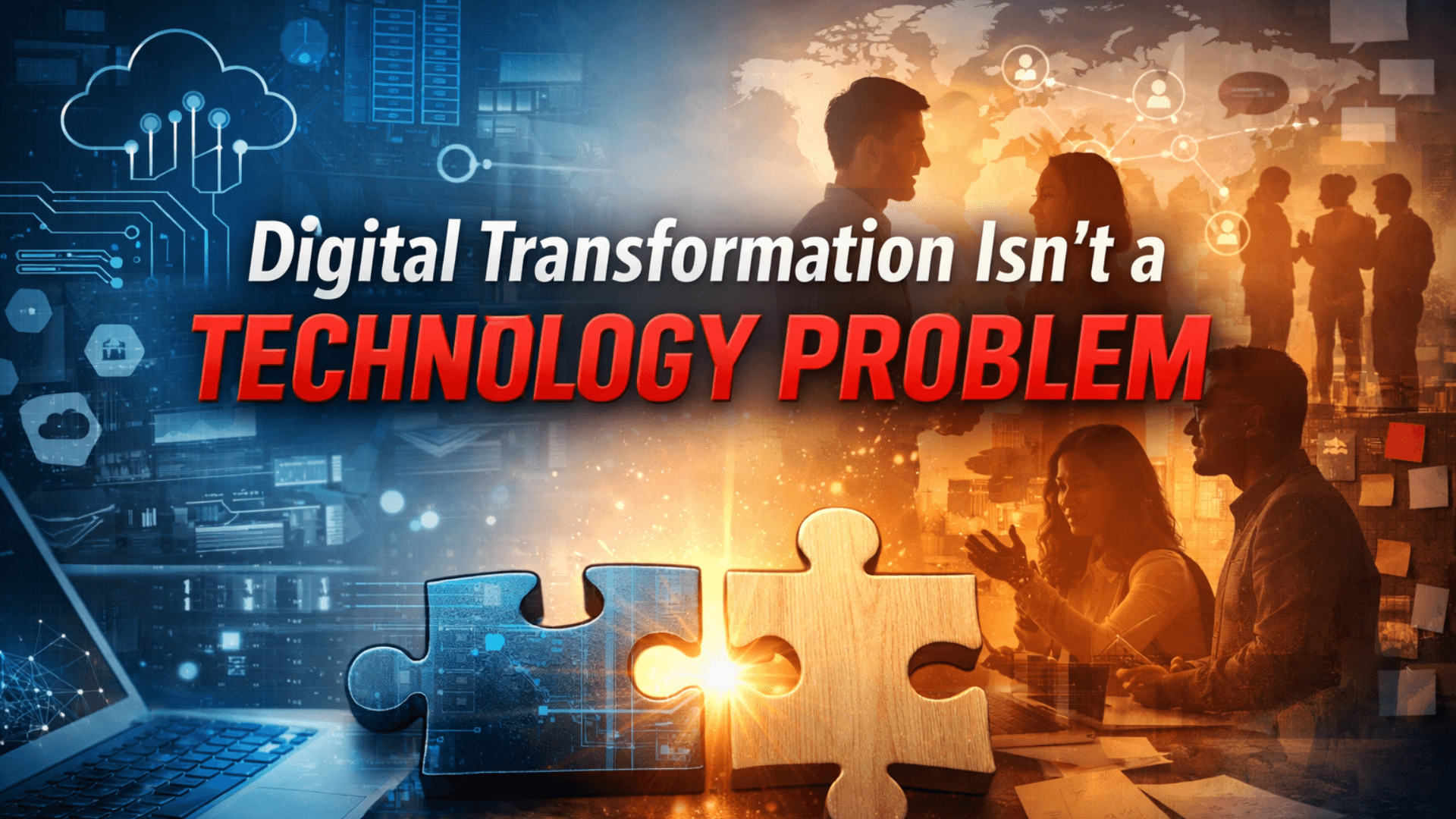
In our Voices of Leadership interview series, where we speak with the partners, MVPs, and digital transformation leaders shaping the future of modern work, Microsoft MVP Steve Knutson offered a reminder that most IT leaders don't want to hear:
"I'm going to sound a little bit like a broken record, but it's actually people."
That insight—delivered while discussing what separates successful migrations from failed ones—cuts to the heart of why so many digital transformation projects stall. Organizations invest millions in migration tools, hire consultants to map data structures, and build detailed technical roadmaps. Yet the projects that fail rarely fail because of technology.
They fail because no one brought the people along for the journey.
The problem is not insufficient technology.
The problem is treating transformation like a technical project instead of an organizational one.
Most migration projects drown in meetings.
Stakeholder reviews. Sign-off sessions. Training schedules. Follow-up workshops. By the time you've coordinated calendars for the third round of approvals, momentum has died and users have mentally checked out.
Knutson's team faced exactly this scenario: 118 different teams that needed to migrate from on-premises SharePoint to the cloud, each with their own workflows, their own resistance, and their own reasons why "now isn't a good time."
The traditional approach would have taken years.
Instead, they redesigned the entire process around a single principle: minimize business user touchpoints.
"We changed our process to a single touch migration approach where we designed the environment, we bring them into the environment, do the review with them, train them and cut them over in one go, and then leave an opportunity for improvement after the migration."
The result? All 118 teams migrated in three months.
But here's what made it work: "Make the plan visible to the organisation. Everyone could see where they were in the process, and it created urgency."
This is not a technical innovation.
This is change management that respects how humans actually engage with change.
Ask most organizations about their legacy data, and they'll tell you it's "mostly clean" or "good enough."
Steve has heard this optimism hundreds of times. And he's watched it derail migration timelines just as often.
"They often forget what happened in the past. Sometimes the data is not structured in exactly the same way SharePoint likes it to be. Sometimes things have happened in the past where perhaps the data's been manipulated."
This is organizational amnesia at scale.
Systems get upgraded. Admins leave. Workarounds become permanent. Someone creates a custom field that breaks naming conventions. A department restructures and orphans 10,000 documents. A vendor integration writes metadata in a format that doesn't translate cleanly.
By the time you're ready to migrate, you're not moving clean data.
You're moving decades of accumulated decisions, shortcuts, and forgotten rationale.
"So we have incomplete metadata or we have a structural change that happened in a system that's especially common if they've been around for many years and through a series of upgrades. And that can really impact both the timeline for the migration and also the quality of the result that you get at the end."
The organizations that succeed don't pretend their legacy environment is cleaner than it is. They budget for discovery. They plan for transformation, not just transportation.
The promise of AI in Microsoft 365 is seductive: intelligent search that surfaces exactly what you need, automated classification that tags documents correctly, agents that handle routine governance tasks.
But Knutson sees the trap most organizations are walking into:
"If your knowledge base is out of date and poor quality content, then not only are your people going to find the wrong answer when they go looking for something or not find the thing they're looking for, but your AI is also going to have the same problem. It's just going to be faster."
Read that again.
AI doesn't fix your content problem—it amplifies it at scale.
Bad metadata becomes bad training data. Outdated documents become confident but incorrect AI responses. The compliance gaps you've been ignoring? AI will surface them to auditors. The security misconfigurations you meant to clean up? AI will expose them to users who shouldn't have access. The mess you've been meaning to clean up for years is now being served to users with algorithmic authority.
"More focus needs to be on keeping the environment tidy and current. We need to automate that with tools, we need tools and processes to automate that because it's a big job. 2 billion documents a day or something coming into SharePoint at the moment."
This is the governance paradox of the AI era:
The organizations that will benefit most from AI aren't the ones with the biggest budgets—they're the ones with the discipline to maintain clean, current, well-governed content.
As Steve puts it: "People that are good at keeping the information tidy will benefit the most."
With Copilot and AI agents gaining traction, the question keeps coming up: does the intranet still matter?
Knutson's answer is unequivocal—but not for the reasons most people expect:
"Will AI replace the internet? We still need a place to publish content. That's the Internet. Where we consume that, could be Teams, it could be an AI chatbot, it could be somewhere else. That doesn't matter so much. We still need that place to publish and anchor the organization."
The intranet isn't dying.
It's evolving from a destination into a source.
But here's the problem: most intranets fail before AI even enters the picture.
"It's very easy to build an intranet and then not have enough good quality content. So it's a bit underwhelming. And I'm a firm believer that you get one shot at getting people engaged. If you don't get them in the first go, it's very, it's hard work later."
The successful intranets Knutson has built share three characteristics:
- Operational information architecture that reflects how people actually work, not how org charts say they should
- Measurable content quality standards enforced through governance, not goodwill
- Automated maintenance tools because "we're time poor in general"
The intranet is no longer a publishing platform.
It's the authoritative source that feeds every other channel—including AI.
Get it wrong at the source, and everything downstream inherits the problem.
What Agents Will Actually Do (Versus What Vendors Are Selling)
Knutson is bullish on AI agents—but his vision looks nothing like the autonomous AI assistants vendors are pitching:
"I like the idea of being able to use agents that can go out there autonomously, look at things, come back to me and tell me what it is that needs to be done, and then I can just approve that and it can go away and do the job for me."
Notice the word: approve.
This is the practical application that matters: agents as auditable assistants, not autonomous decision-makers. They surface issues. They recommend actions. But humans remain in the approval loop.
Why? Because as Steve has learned through years of consulting: "Tech isn't about tech. It's about people. And our job is to connect the technology to people so they can get on and do their thing."
The agents that will succeed in enterprise environments aren't the ones that replace human judgment. They're the ones that scale human oversight—making it possible to maintain governance standards across environments too large for manual management.
If Steve could give one piece of advice to organizations modernizing their Microsoft environment, it would be this:
"Don't lift and shift your current environment into the future, into your future environment, because you're just moving things. So that's not transformation, that's just shifting."
The logic seems sound: minimize risk by keeping everything the same, just in a new location.
But this approach misses the entire point of modernization.
"Transformation comes from having a deep look at your organization and saying, how do we want to work going forward? Because a lot of the way people are working now on their classic environments and file servers and even old SharePoint was the way they were working 20 or 30 years ago."
This is the moment of leverage that most organizations waste.
You have executive attention. You have budget. You have a mandate for change. And you have users who expect disruption—which means they're mentally prepared for new ways of working.
"Now's the opportunity to change. You get the one chance to engage with the organization, do the change management and re-architect your business, do it through that transformation."
The organizations that treat migration as a technical project get a technical outcome: same processes, different platform.
The ones that treat it as a business transformation opportunity get something more valuable: operational improvement that compounds over time.
You get one shot at this. Don't waste it moving old problems to new infrastructure.
Steve Knutson's insights reveal a pattern that cuts across every successful digital transformation he's led:
Future-ready organizations are not the fastest adopters of new tools.
They are the fastest adopters of new behaviors.
They don't chase technology—they orchestrate it around how people actually work.
They don't accumulate data—they govern it with the discipline AI demands.
And they don't fear change—they design for it through systematic change management that respects human engagement patterns.
The migrations that succeed prioritize people over platforms. The intranets that thrive maintain content quality as rigorously as they maintain security. The AI implementations that deliver value start with clean, well-governed data repositories. And the transformations that stick use migration as an opportunity to rethink how work gets done, not just where files get stored.
As AI capabilities accelerate and Microsoft continues shipping new features, the gap between organizations with strong governance and those without will only widen. The technology will get smarter. The tools will get more powerful.
The question is whether your organization will keep pace—not with the features, but with the discipline required to use them effectively.
And as Steve reminds us, that transformation begins not with the software, but with the people who use it.
Related Products
Ready to get started?
Experience the benefits of our product today.